

Pali teachings : ค้นหาหนังสือธรรมะ หน้า 2 / 4
หน้าหนังสือทั้งหมด
3
Garudhamma 8 and Gender Equality in Early Buddhism
Abstract:
Garudhamma 8, What did the Lord Buddha Establish?
by Wilaiporn SUCHARITTHAMMAKUL
This paper deals with the Buddhist outlook on gender issues.
Contemporary feminists have extrapolated moder
This paper investigates the debate surrounding the eight garudhamma and their perceived authenticity in Buddha's teachings, analyzing gender equality in early Buddhism. It reviews claims challenging t
3
Garudhamma 8: Exploring Gender Issues in Buddhism
Garudhamma 8
What did the Lord Buddha Establish?
Wilaiporn SUCHARITTHAMMAKUL
Abstract
This paper deals with the Buddhist outlook on gender issues. Contemporary feminists have extrapolated moder
This paper examines the Buddhist perspective on gender issues, particularly the eight garudhamma, which have been contested in modern debates around gender equality. It investigates whether these teac
15
Understanding the Dhammacakka Pavattana Sutta
be practised by anyone, giving access to the highest attain- ments — even attainments on a par with that of the Lord Buddha himself.
That the Buddha was able not only to understand Dhamma teachings, b
The Dhammacakka Pavattana Sutta serves as the foundational teaching of Buddhism, delivered by the Buddha to the group of five monks. It encapsulates essential principles that are crucial for anyone wi
193
Sourced Teachings and Dhamma Practices
Part Seven: Appendixes
Sourced Teachings
Grouped Dhamma Teachings in Numerical Order:
Groups of Four:
Four Actions that Lead to Spiritual Growth (Vuddhi):
1. Search for a good teacher; role-model (Sap
In this section, we outline essential Dhamma teachings that guide spiritual growth and ethical living. The four actions leading to spiritual advancement include searching for good teachers, deeply lis
35
Exploring the Concept of Dhammakāya in Pali Canonical Texts
Of the three canonical passages mentioned above, only the first, namely the Aggañña-sutta passage, contains the term dhammakāya, while the other two do not. The reason for which all these passages are
This study reexamines the term dhammakāya in specific Pali canonical passages, notably the Aggañña-sutta, contrasting it with previous scholarly interpretations that often exclusively link the term to
163
Understanding Pali and Parami in Buddhism
Pali: an ancient language used in India, now no longer an active language. The original Buddhist scriptures were written in Pali. Pali texts are used by the Theravada school of Buddhism.
Parami: a Pa
Pali is an ancient language from India that is no longer actively spoken but holds significant historical importance as the original language of Buddhist scriptures. These scriptures serve as a core e
50
Journey to Dhamma: A Personal Transformation
ERVICE
merits. If I had huge problems, I would make huge
merits. This was how I learned about Wat Phra
Dhammakaya in 2001, under the guidance of a good
fellow (kalyanamitta) from Korat who suggested t
This text chronicles a personal journey of spiritual growth, initiated by the author's experiences at Wat Phra Dhammakaya and the DMC program. From the suggestion of a friend, the author contributed t
33
Reinterpreting Dhammarāya in the Pali Canon
Most of them refer only to the Aggañña-sutta passage, 4 missing out the three Apadāna references. 5 The reason could be either that the scholars concerned have taken the aforementioned text as represe
This paper examines the overlooked references to dhammarāya in the Pali canon, emphasizing a context not previously presented. It critiques the tendency to categorize texts strictly as ‘early Buddhism
77
Re-evaluating the Concept of Dhammakāya in the Pali Canon
No-one can upset the (Padumuttara Buddhu) entire mine of jewels, who is demonstrating the dhammakāya; having seen him, who is not pleased?
In order to clarify further regarding the precise connotation
This study revisits the term dhammakāya in the Pali canon, highlighting its significance in Buddhist teachings. By examining the Sambuddha-sutta, the relationship between 'the path' and dhammakāya is
250
A Comprehensive Look at Buddhist Literature and Philosophy
Crosby, Kate et.al. “The Sutta on Understanding Death in the Transmission of Born Meditation From Siam to the Kandyan Court,” in Journal of Indian Philosophy, 40.
Crosby, Kate. 2000. “Tantric Theravā
This collection presents an array of scholarly works focused on the literature and teachings of Buddhism. It includes analyses of the Sutta on Understanding Death, Tantric Theravāda writings, and the
561
Early Influences and Studies in Buddhism
Bumbacher, Stephan Peter. 2007. "Early Buddhism in China: Daoist Reactions." In A. Heirman and S. P. Bumbacher, eds., *The spread of Buddhism*, pp. 203-246. Leiden: Brill.
Chandawimala, Rangama. 2013.
This compilation examines significant scholarly works on early Buddhism, including Stephan Bumbacher's study of Daoist reactions to Buddhism in China, and Rangama Chandawimala's analysis of the Abhaya
59
The Importance of Chanting in Buddhism
your mind will clear and be open to receive merit. Your thoughts, speech, and action will not be led astray by temptation.
Performing Vatta serves constantly to remind us of the virtues of the Triple
Chanting in Buddhism plays a crucial role in enhancing faith and preserving teachings of the Buddha. It reminds practitioners of the virtues of the Triple Gem and helps them avoid temptation. Historic
7
Understanding the Mind in Thai Culture
"this or that", "black or white", with no gray area, as the
locals find this logic easy to grasp and put into practice. In
addition, Thai culture and language has a relatively large
amount of words an
This text discusses the simplicity of dualistic thinking in Thai culture and the rich linguistic resources that explain human cognition. It emphasizes that terms often linked to Buddhism should be tre
123
The Great Refuge of Humankind: Understanding the Teachings of the Lord Buddha
1. The mentor should have an unambiguous
biography. There must be proof of his life history; it can not
be vague and unreliable.
2. He must be extremely intelligent, exceptionally
virtuous, exceedingl
This text examines the criteria for an exemplary mentor, using the Lord Buddha as a prime example. It highlights the importance of a well-documented biography, exceptional knowledge, and the ability t
11
The Teachings of Luang Por Dattajeevo
Suzanne Jeffrey
Life, of course, is not as neat as these teachings are laid out for you, and we do not always meet
life’s stresses, or sufferings, head-on with a Dhamma teaching. When I become frustr
Suzanne Jeffrey reflects on her journey of understanding Dhamma teachings through the wisdom of Luang Por Dattajeevo. She shares insights into dealing with life's challenges, the importance of mindful
115
Understanding Boon and Dhamma
Suzanne Jeffrey
Q: How is boon generated?
A: Boon is created by doing good acts, keeping precepts, meditating, and listening to the Dhamma. You can feel the energy that is created by these four thing
Boon is generated by good actions, keeping precepts, meditating, and listening to Dhamma. It creates positive energy that purifies the mind. Conversely, baap, or bad energy, arises from negative thoug
16
Dissemination of Buddhism and the Noble Eightfold Path
Part 2
The Theory
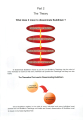
What does it mean to disseminate Buddhism ?
Dissemination of Buddhism
↓
The Lord Buddha’s Teachings
↓
Reside in the Mind of Every Individual
↓
Practice Them until They Become habits
The dissemination of Buddhism involves instilling the Lord Buddha’s teachings into the minds of individuals so they can practice these teachings as habits. Central to this process is the Noble Eightfo
90
Buddhist Manuscripts from Sipsong Panna Region
Buddhist manuscripts from the Sipsong Panna region can be divided into four categories. The first category consists of the Dai Pāli Tripiṭaka and Tripiṭaka commentary (三藏琢) which is represented by fiv
Buddhist manuscripts from the Sipsong Panna region are categorized into four main groups: the Dai Pāli Tripiṭaka and Tripiṭaka commentary, frequently used Pāli Canon texts, Theravāda Buddhist literatu
252
Exploratory Insights into Early Buddhist Texts and Practices
Jantrasrisalai, Chanida. 2011. “Criteria for Identification of Elements of Dhammikāya Meditacionds., Early Buddhist Traces of Dhammikāya Meditation : Project Overview.
Keenam P. John. 1982. Original p
This text presents an overview of significant scholarly works on early Buddhist practices and literature, focusing on the criteria for identifying elements of Dhammikāya meditation and examining the p
3
Influence of Lokappadīpakāsāra on Pāli Buddhism
Abstract:
**Influence of Lokappadīpakāsāra**
on the Pāli Buddhism in Later Period:
Based on Quotations of the *Lokappadīpakāsāra* in the *Cakkavaḷadīpaṇi* and *Lokaśaṅṭhānājotaratanagaṇṭhī*
by
This study examines the significant influence of the Lokappadīpakāsāra, a 14th-century text, on two later Pāli texts: the Cakkavaḷadīpaṇi and Lokaśaṅṭhānājotaratanagaṇṭhī, both dating from the 16th to